Monday, July 31, 2023
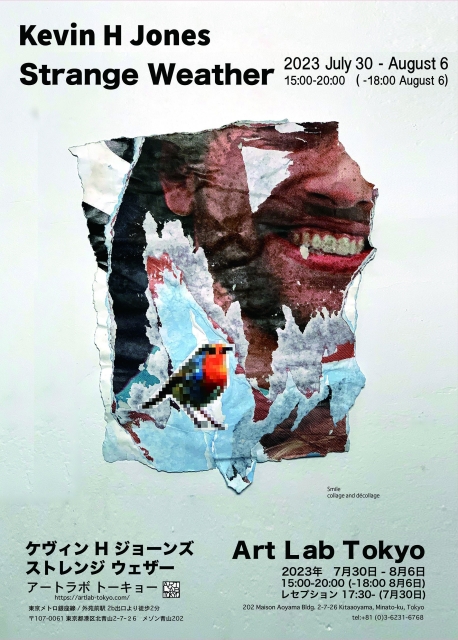
Kevin H. Jones: solo exhibition in Tokyo

Friday, March 17, 2023
Atlantic Slavery and the Ethics of Cartography: Brazil, September 1763

Matthew Rarey, Associate Professor of African and Black Atlantic Art History at Oberlin College, looks at a unique work of Black Atlantic visual culture: the map of Buraco do Tatú, a quilombo (primarily African-populated maroon polity) invaded and destroyed on the orders of the Viceroy of Brazil in September of 1763. Produced by a military cartographer immediately after the battle and today held at an archive in Lisbon, it is one of only two extant maps of the hundreds of such polities that existed in Brazil during its slavery period and by far the most detailed. With careful renderings of the quilombo’s fortifications, buildings, and agricultural plots, it presents a potentially rich archive of Africans’ lifeways in colonial Brazil. Yet its aerial view, textual narrative, and haunting rendering of Africans killed during the battle collectively testify to its ambivalence: a colonial attempt to freeze, and thus reckon with, a fugitive landscape as a precondition of its violent erasure. Looking to a small but rich visual history of mapping maronnage – and thus mapping that which was never meant to be mapped – and dialoguing with work on landscape studies, fetishism, and Black feminist cartographies, this talk presents some initial conclusions on how this unprecedented object demands new forms of ethical engagement with the archives of Atlantic slavery.
Monday, March 20 2023 at 5:30 PM
Freeman Auditorium, Woldenberg Art Center
Attendees are asked to be aware of parking restrictions on Tulane's uptown campus. More info here: https://campusservices.tulane.edu/departments/parking/uptown
image: Unrecorded artist, Plan of the Quilombo called Buraco do Tatú (detail), 1763 or 1764. Arquivo Histórico Ultramarino, Lisbon, Portugal
Wednesday, March 8, 2023
2023 MFA Thesis Exhibitions

Ina Kaur: ਇੱਕ ਦੂਜਾ (ik Duja) “the Other one”
As a woman and an artist living in a heightened global, political, ecologically imbalanced, and socially unequal and unjust world, Ina's work attempts to continuously move beyond cultural constructs, freeing from restrictive beliefs and assigned identities. As an interdisciplinary practitioner critiquing the otherness and oppressed identities, the work empowers the self to navigate freely and fluidly, embracing the 'other' and 'one's' own new unsettled freedom as it celebrates the ever-shifting and constantly evolving notion of self, home, and belonging.
Opening reception: Friday, March 10, 5:30 – 7:30pm
Exhibition on view: March 9 – March 17
website: www.inakaur.com IG: @studio_inkspace
As a first-generation Afro-Latine interdisciplinary artist, archivist and researcher, Maynard works across various forms of mediums to critique the way beings from the African diaspora past, present and future have been memorized by history. A direct analysis of how structures of colonialism, capitalism and time have directly impacted and shifted the experiences of descendants of the African diaspora.
Opening reception: Friday, March 10, 5:30 – 7:30pm
Exhibition on view: March 9 – March 17
website: www.photofelli.com IG: @photofelli
Stephanie Steele: Ocular Navigations of Internal and External Space
Stephanie E. Steele (S.E. Steele) is an educator and artist who blends printmaking and photographic techniques to create largescale works on paper. She examines the interconnection between our internal perception created through cognitive vision, and the navigation the external world experienced through optical phenomena.
Opening reception: Friday, March 24, 5:30-7:30pm
Exhibition on view: March 23 - April 7
website: https://www.sesteelefineart.com IG: @sesteelefineart
Erica Westenberger: Twisting in honey and swallowing dust

Erica Westenberger is an interdisciplinary artist who renders illusory narratives about experiences of internal conflict. Through graphite drawing and sculptural processes, she builds motifs that explore the complexities of mental health under the framework of myth. Tension is used as a recurrent theme within formal relationships and allegorical motifs to suggest the underlying states of apprehension that are a part of nuanced internal journeys.
Opening reception: Friday, April 14, 5:30 – 7:30pm
Exhibition on view: April 13 - 21
website: www.ericawestenberger.com IG: @erica.westenberger
Lee Laa Guillory: This is her body, which has broken for you
Guillory’s practice investigates, through ritual-based photographs and performance, the transgenerational trauma to which Black femmes in rural Louisiana have been subjected. Her intimate photographs, carefully staged and lit, frequently focus on hair and hair maintenance, and depict femmes in emotional states ranging from that of quiet reflection to that of raw fury.
Opening reception: Friday, April 14, 5:30 – 7:30pm
Exhibition on view: April 13 - 21
Wednesday, March 1, 2023
Reimagining Raphael lecture by Lisa Pon and Tracy Cosgriff
.jpg "Stanza della Segnatura (\"Room of the Signatura\"), Raphael Rooms, Apostolic Palace, Vatican City")
Pages, Plaster, and Computer Screens: Reimagining Raphael and the Library of Julius II
by Lisa Pon & Tracy Cosgriff
Monday, March 13, 6pm
Stone Auditorium
210 Woldenberg Art Center
Abstract Raphael’s frescoes in the Stanza della Segnatura, once the private library of Julius II, manifest a monumental thesis on Renaissance theories of word and image. The rediscovery of the Stanza’s collection of deluxe volumes demonstrates that the chamber was animated by a recursive chain of media, from painting to text. Using 3D technologies to reunite the books and the frescoes, this panoramic reconstruction illuminates new dimensions of the Stanza’s experience for its early visitors and elucidates the synergistic intellectual web on which the room's design was predicated. It asks: How was the Stanza engaged by its early modern audience? How might the spatial analysis of the pope’s literary collection shape our interpretation of the chamber’s meaning? How does the relationship of text and image inform our understanding of Renaissance cultures of reading? And how do these investigations inform current urgent discussions about what a library has been and could become?
Lisa Pon, Professor of Art History, University of Southern California
Lisa Pon specializes in early modern European art, architecture, and material culture, focusing on the mobilities of art, artistic authority and collaboration, and the Renaissance concept of copia or abundance. Her first book, Raphael, Dürer and Marcantoni Raimondi: Copying and the Italian Renaissance Print, was published with Yale University Press in 2004; Cambridge University Press published her most recent monograph, Printed Icon: Forlì’s Madonna of the Fire, in 2015; and she is co-editor or co-author of three additional volumes. Her articles have appeared in venues including Art Bulletin, Art History, Word & Image, Print Quarterly, Renaissance Studies, Journal of the Warburg and Courtauld Institutes, Boletín del Museo del Prado, and Journal of the Acoustical Society of America.
Tracy Cosgriff, Assistant Professor of Art History, College of Wooster
A lifelong student of Latin and Greek, Professor Cosgriff is interested in the relationship of word and image in Renaissance Italy, the reception of antiquity, and the history of the book. Her research focuses on the painter Raphael and his critical engagement with the classical tradition. She is currently completing a book on Raphael’s famous frescoes in the private library of Julius II, revisiting these canonical compositions in light of the pope’s collection of luxury manuscripts and printed books. Forthcoming publications reconsider aspects of Raphael’s pictorial practice and the legacy of his papal patrons. Other projects investigate the intersection of artistic and poetic design, including the visual inheritances of Horace and Dante.
This lecture is supported by the William L. Duren ’26 Professorship Program.
Thursday, February 23, 2023
Visiting Artist Daniel Alley

Daniel Alley was born in Anchorage, Alaska. He received his BFA in ceramics from Washington State University in 2003 and his MFA in glass from Tulane University in 2014. Dan frequently exhibits work throughout the city, including the New Orleans Museum of Art, the Contemporary Art Center, Good Children, and The Front. His playful yet intellectual mixed-media sculptures combine his knowledge of material processes with an interest in history and science. As owner and operator of Denali Art Solutions, Dan now dedicates most of his time and knowledge in assisting museums, galleries, and artists from around the world with their custom art fabrication, installations, and logistical needs.
Attendees are asked to be aware of parking restrictions on Tulane's uptown campus. More info here: https://campusservices.tulane.edu/departments/parking/uptown
Wednesday, February 22, 2023
Alexis Culotta’s new book reviewed in Renaissance Quarterly

This book explores how the Renaissance artist’s style – one infused with borrowed visual quotations from other artists both past and present – proved influential in his relationship with associate Baldassare Peruzzi and in the development of the artists within his thriving workshop.
DOI: https://doi.org/10.1017/rqx.2022.352Tuesday, February 14, 2023
The First Viral Images: Maerten De Vos, Antwerp Print, and the Early Modern Globe
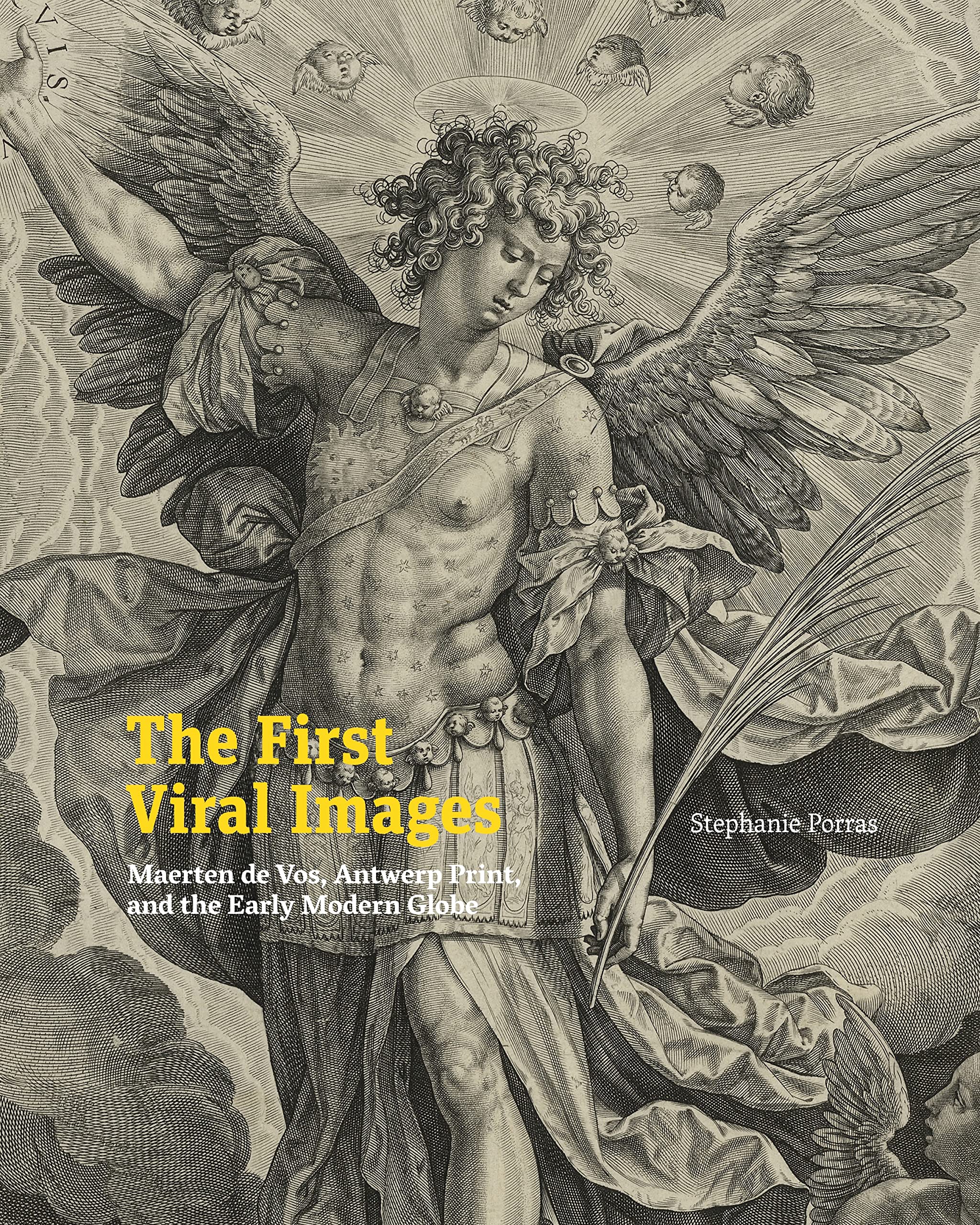
Publisher's Synopsis As a social phenomenon and a commonplace of internet culture, virality provides a critical vocabulary for addressing questions raised by the global mobility and reproduction of early modern artworks. This book uses the concept of virality to study artworks' role in the uneven processes of early modern globalization.
Drawing from archival research in Asia, Europe, and the Americas, Stephanie Porras traces the trajectories of two interrelated objects made in Antwerp in the late sixteenth century: Gerónimo Nadal's Evangelicae historiae imagines, an illustrated devotional text published and promoted by the Society of Jesus, and a singular composition by Maerten de Vos, St. Michael the Archangel. Both were reproduced and adapted across the early modern world in the seventeenth century. Porras examines how and why these objects traveled and were adopted as models by Spanish and Latin American painters, Chinese printmakers, Mughal miniaturists, and Filipino ivory carvers. Reassessing the creative labor underpinning the production of a diverse array of copies, citations, and reproductions, Porras uses virality to elucidate the interstices of the agency of individual artists or patrons, powerful gatekeepers and social networks, and economic, political, and religious infrastructures. In doing so, she tests and contests several analytical models that have dominated art-historical scholarship of the global early modern period, putting pressure on notions of copying, agency, context, and viewership.
Vital and engaging, The First Viral Images sheds new light on how artworks, as agents of globalization, navigated and contributed to the emerging and intertwined global infrastructures of Catholicism, commerce, and colonialism.
Friday, January 20, 2023
Adrian Anagnost: When Modernism Met the Mob in Brasília

Check out Professor Adrian Anagnost’s recent publication in CityLab on Bloomberg! Her article “When Modernism Met the Mob in Brasília” discusses recent Brazilian political events in relation to the city of Brasília, which was designed by urbanist Lúcio Costa with buildings by architect Oscar Niemeyer.
Tuesday, January 10, 2023
Michelle Foa to lecture at Cleveland Museum of Art

“Destined to be born and perish with equal quickness”: The Making and Unmaking of 19th-Century Paper”
Michelle Foa, Associate Professor of Art History in the Newcomb Art Department of Tulane University
Friday, January 20, 2023, 5:30 p.m.
Cleveland Museum of Art, Morley Family Lecture Hall
The nineteenth century witnessed a revolution in the manufacture and use of paper that had far-reaching effects on the arts. This lecture, organized to complement the exhibition Nineteenth-Century French Drawings from the Cleveland Museum of Art, situates the changes that paper underwent in the context of key developments in trade, cotton cultivation, and textile production and consumption around the world. It also highlights artists’ and writers’ reactions to these shifts, revealing their profound concern about the longevity of the paper supports of their pictures and publications.
Michelle Foa is associate professor of art history in the Newcomb Art Department of Tulane University. Her research focuses on 19th-century French art and visual and material culture.
This event is supported by the Getty Foundation as part of The Paper Project initiative and by the Wolfgang Ratjen Foundation, Liechtenstein.
{image: Études de chiffonniers (detail), 1849. Gustave Doré (French, 1832–1883). Lithograph; 33.8 x 25.7 cm. Bibliothèque Nationale de France. Photo: BnF}
Monday, December 19, 2022
From the Moon: Mapping the Uncharted

Listen in to Episode 4: Mapping the Uncharted, where Prof Geddes talks about how maps reveal the ways in which we try to expand beyond the limits of our vision and how mapmaking can help uncover the mysteries of the world around us through representing vantage points we can't see or experience firsthand. From the Mississippi Delta in Louisiana to an icy moon of the distant
planet Saturn, the episode goes to see how geography and design, as well
as art and science fuse to create the maps we often take for granted.
Available here: https://triennale.org/en/magazine/from-moon-2-episode-4
and wherever podcasts are found!
Perception, Ritual, and Memory in an Illustrated Manuscript of the Meditationes Vitae Christi

Professor Flora's new book The Meditationes Vitae Christi Reconsidered New Perspectives on Text and Image (co-edited with Peter Toth) is a collection of critical essays on this fourteenth-century Sienese illuminated manuscript.
Called to the Camera: Black American Studio Photographers

PUBLICATION ALERT: Art History alum Zoe Ariyama (BA, 2022) recently published an article in the Brooklyn Rail on the New Orleans Museum of Art's current exhibition “Called to the Camera: Black American Studio Photographers.”
Art History alum Rebecca Villalpando (MA, 2022) contributed to this exhibition during her time as a graduate curatorial intern at NOMA.
Read the article here: https://brooklynrail.org/2023/12/artseen/Called-to-the-Camera-Black-American-Studio-Photographers
[James Presley Ball, Alexander S. Thomas, ca. late 1850s. Quarter plate daguerreotype. Courtesy Cincinnati Art Museum]
Thursday, December 8, 2022
Newcomb Art Department Holiday Sale
 |
After a two-year hiatus, our beloved holiday sale is back! Please join us on December 9th and 10th for the Newcomb Art Department Holiday Sale featuring works in glass, ceramics, printmaking, fiber, works on paper, painting, and more. All works are by Tulane undergraduate and graduate students, faculty, staff, and alumni.
PLEASE NOTE RE: PARKING
There is no visitor parking on campus without a permit before 5:30 pm on Friday.
You may park on Audubon Blvd. (2-hr) or Broadway at that time. We will have two spots near the gallery reserved for those needing assistance.
Parking on campus is permitted on Saturday.
Please email Laura Richens lrichens@tulane.edu for more information.
Tuesday, December 6, 2022
Dutch Americas Symposium

Material Matters in the Dutch Atlantic World: Albert Eckhout’s Paintings of an African Man and Woman
lecture by Carrie Anderson, Middlebury College
Friday, December 9 2022 at 5:30 PM
Stone Auditorium, Woldenberg Art Center
download symposium program (pdf)
 The following day, graduate students from Johns Hopkins and Tulane will be
presenting their final projects - object-based research on the visual
and material culture of the Dutch West India Company (WIC). The WIC,
founded in 1621, traded across the Atlantic, with footholds in regions
of New York, Curaçao, Guyana, Brazil, Suriname, Ghana and Benin –
dealing primarily in fur, tobacco, sugar, gold and enslaved Africans.
Modeled on laboratory courses in the sciences, the seminar saw teams
comprising of students from both schools working on a specific geography
(New Netherland/New York, the Caribbean, West Africa, Brazil) working
together in order to identify, research, catalog, and publish relevant
items in a web-based database. This symposium celebrates and reflects on
this groundbreaking foundational research in an emerging field of art
historical scholarship, the assembly of a corpus of objects, sites, and
materials related to the Dutch trading companies present in the
Americas.
The following day, graduate students from Johns Hopkins and Tulane will be
presenting their final projects - object-based research on the visual
and material culture of the Dutch West India Company (WIC). The WIC,
founded in 1621, traded across the Atlantic, with footholds in regions
of New York, Curaçao, Guyana, Brazil, Suriname, Ghana and Benin –
dealing primarily in fur, tobacco, sugar, gold and enslaved Africans.
Modeled on laboratory courses in the sciences, the seminar saw teams
comprising of students from both schools working on a specific geography
(New Netherland/New York, the Caribbean, West Africa, Brazil) working
together in order to identify, research, catalog, and publish relevant
items in a web-based database. This symposium celebrates and reflects on
this groundbreaking foundational research in an emerging field of art
historical scholarship, the assembly of a corpus of objects, sites, and
materials related to the Dutch trading companies present in the
Americas. The Dutch Americas Symposium is supported by Johns Hopkins and the Newcomb College Institute’s Dorothy Beckemeyer Skau Art and Music Fund.
Tuesday, November 29, 2022
Emery K. Tillman , 3D art shop manager

The Newcomb Art Department is pleased to introduce our newest team member, Emery K, Tillman, 3D art shop manager.
Emery Kate Tillman (they/them), originally from New Orleans, holds a B.A in studio art from College of Charleston and an MFA in studio art from Louisiana State University. They consider themself a material investigator in their studio practice and have a heavy mixed media background with mediums spanning from textiles, glass, wood, metal as well as digital fabrication tools.
In their practice they explore what queer joy looks like when joy is used as a form of rebellion and power. They play particular interests in interpersonal communications in this community and what the visual language of vulnerability looks like. They have shown throughout the country as well as in Thailand and the Czech Republic. They have a background in making spaces more accessible and look forward to continuing this work at Tulane.
Tuesday, November 15, 2022
Black Arts Consortium Graduate Working Group Workshop
Anne Lafont: "Tying, publicizing, adorning: The buttons of Toussaint Louverture"

"Tying, publicizing, adorning: The buttons of Toussaint Louverture"
by Dr. Anne Lafont, École des hautes études en sciences sociales, Paris
Abstract The legend and reality of the 18 buttons kept at the Cooper-Hewitt Museum in New York force us to take a close look at their making in the latter part of the eighteenth century Caribbean and in the light of one of its most illustrious black personalities: Toussaint Louverture, pioneer of the Haitian revolution, emancipated slave, ally of the European powers, deposed prisoner and captured by Napoleon Bonaparte’s armies, who died in exile in a French dungeon. The function, iconography, medium and biographical fortune of this series of buttons inform an exceptional history where Caribbean, French and American figures intersect over two centuries. Unfolding the panoply of buttons and following their phenomenology, on a formal and social levels, from manufacture to use, is to write a piece of the history of art of the Black Atlantic.
Anne Lafont is an art historian and professor at the École des hautes études en sciences sociales in Paris. She is interested in the art, images, and material culture of the Black Atlantic, as well as in historiographical questions related to the notion of African art. She has published on art and knowledge in an imperial context, on gender issues in the art discourse of the 18th and 19th centuries, and more recently she published a book : L'art et la race. L'Africain (tout) contre l'oeil des Lumières. It was awarded the 2019 Fetkann Maryse Condé Literary Prize and the 2020 Vitale and Arnold Blokh Prize. Anne Lafont participated, as a member of the scientific committee, in the Musée d'Orsay exhibition The Black Model (2019). In 2021, she was awarded a residential fellowship from the cultural services of the French Embassy in the United States, the Villa Albertine, and served, for the academic year 2021-2022, as the Robert Sterling Clark Visiting Professor of Art History at Williams College (Massachusetts). Her most recent book : L'Afrique et le monde. Histoires renouées de la préhistoire au XXIe siècle (La découverte, 2022) is co-edited with François-Xavier Fauvelle.
Wednesday, December 7 2022 at 6:00 PM
Freeman Auditorium, Woldenberg Art Center
View Map
This lecture is supported by the Sandra Garrard Memorial Fund.
Friday, November 4, 2022
Objects in Focus: Clothes by Betsy Packard, MFA 1978
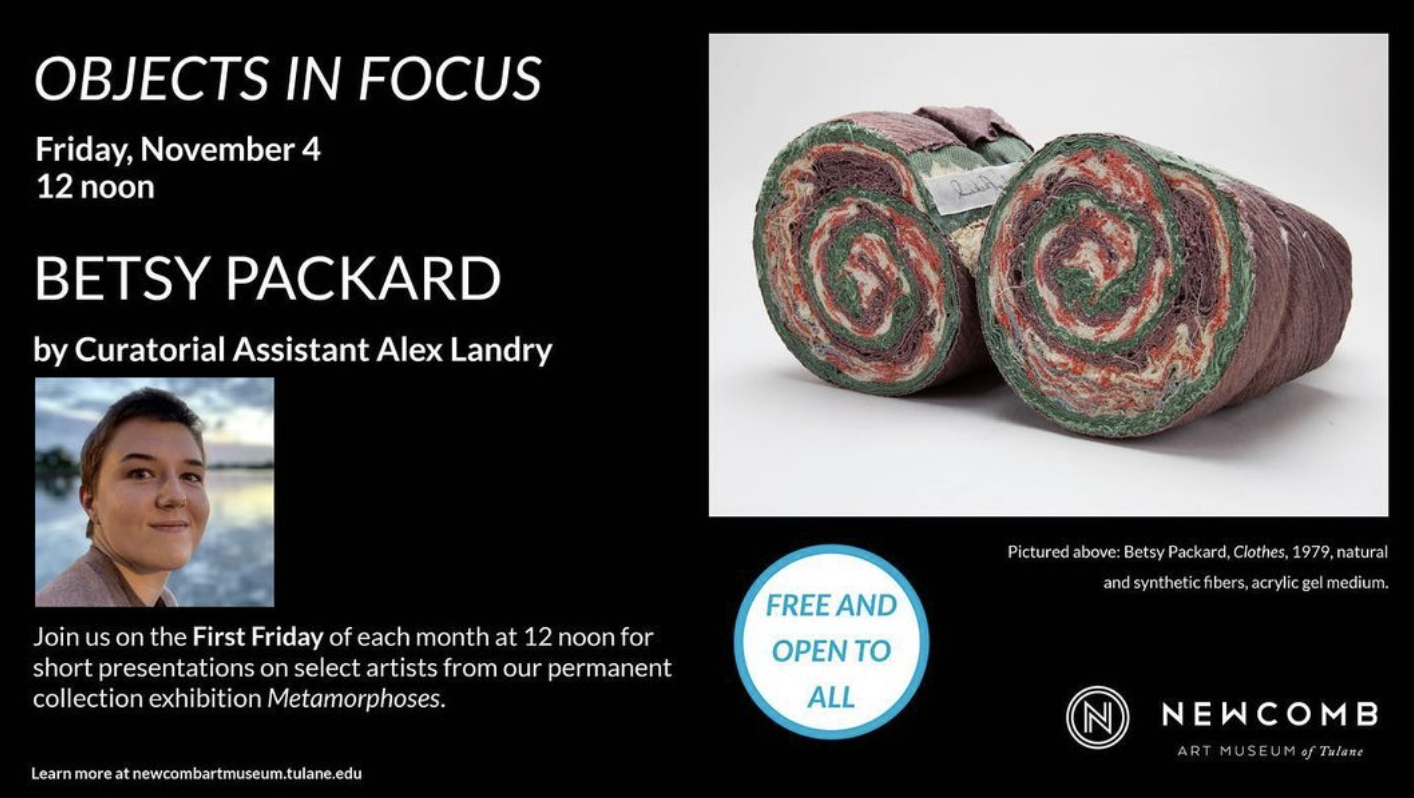
Friday, November 4, 12 pm
Newcomb Art Museum
This talk will be led by Alex Landry, Curatorial Assistant at the Newcomb Art Museum and a 2nd-year Art History MA student.
This event is free and open to all.
Friday, October 7, 2022
"Paper, Ivory, Feathers: Viral Materiality in the Early Modern World"

Stephanie Porras: "Paper, Ivory, Feathers: Viral Materiality in the Early Modern World"
Fri, Oct 14, 2022 | 12:15 - 1:30 pm
1210 Heller Hall, University of Minnesota
Minneapolis, MN 55455
Event Registration
Cosponsored by the Department of Art History and the Early Modern Atlantic Workshop.
This is a hybrid event. Click the registration link to sign up for the Zoom webinar.
Tuesday, October 4, 2022
Ina Kaur: artist residency at MIAD

During her visit Ina engaged the MIAD community through an artist lecture and was part of the panel "Contemporary art practices: artistic journey across cultural boundaries and ethnic borders." The works created during the residency are on display at the MIAD galleries until Oct 08, 2022.
Ina's interdisciplinary practice uses various mediums, and she continues to push the material boundaries in her work. Her newest project titled, “coloniality of expression” utilized lithography, etching, ceramics and stitching.
#miadprints2022 #miadprintmaking #tulaneart
IG: @studio_inkspace
Subscribe to:
Posts (Atom)